How to Convert Your Followers Into Email Subscribers

Social media is a great place to build an audience. It's not a great place to own one.
Platforms change their algorithms. Reach drops. Accounts get restricted. And no matter how many followers you have, you're one policy update away from your audience becoming significantly harder to reach.
An email list is different. Those subscribers chose to hear from you directly, and no algorithm stands between your message and their inbox. For business owners, converting social media followers into email subscribers isn't just a nice-to-have. It's one of the most important things you can do for the long-term health of your business.
Here's how to actually make it happen.
Step 1: Give People a Real Reason to Subscribe
The days of "sign up for my newsletter" working on its own are over. Your audience needs a compelling, specific reason to hand over their email address, and the more clearly you articulate what they'll get, the more people will sign up.
There are two main approaches that work well: a lead magnet, and a genuinely valuable newsletter.
Lead magnets are free resources you offer in exchange for an email address. The best ones solve a specific problem your audience has right now. Think templates, checklists, guides, mini-courses, swipe files, and toolkits. The more specific and immediately useful, the better the conversion rate.
"Free guide to growing your business" is too vague to excite anyone. "A free 5-day email course on pricing your services with confidence" is specific enough that the right person will want it immediately.
Valuable newsletters work when people genuinely believe your emails are worth reading. If your social content is consistently useful and your audience trusts your perspective, making the value of your newsletter clear ("every week I share X, Y, and Z that I don't post anywhere else") can be enough on its own.
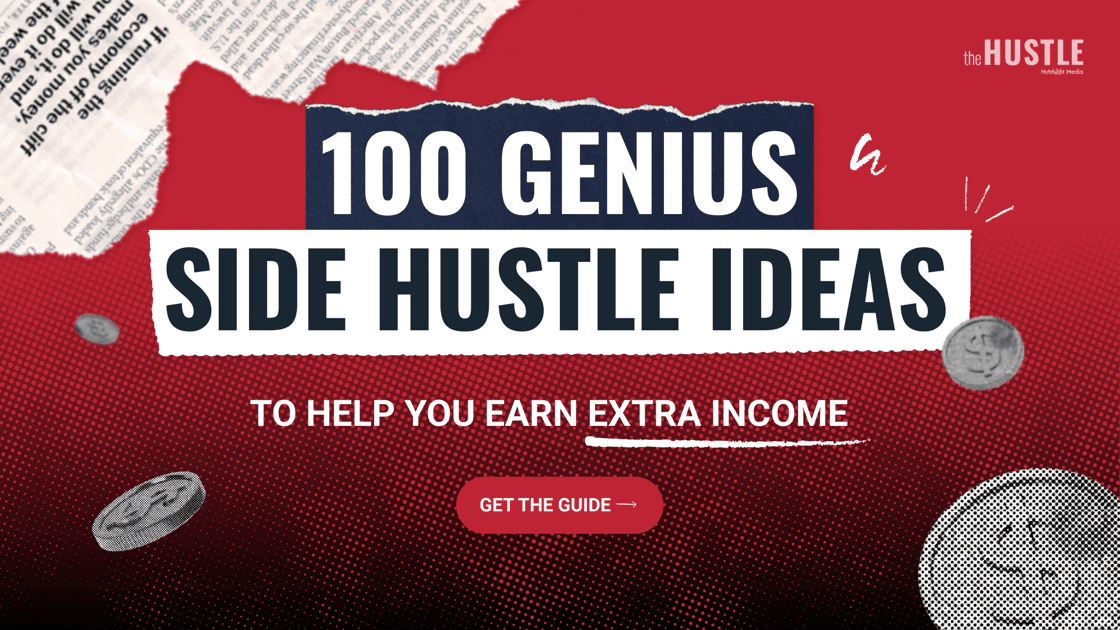
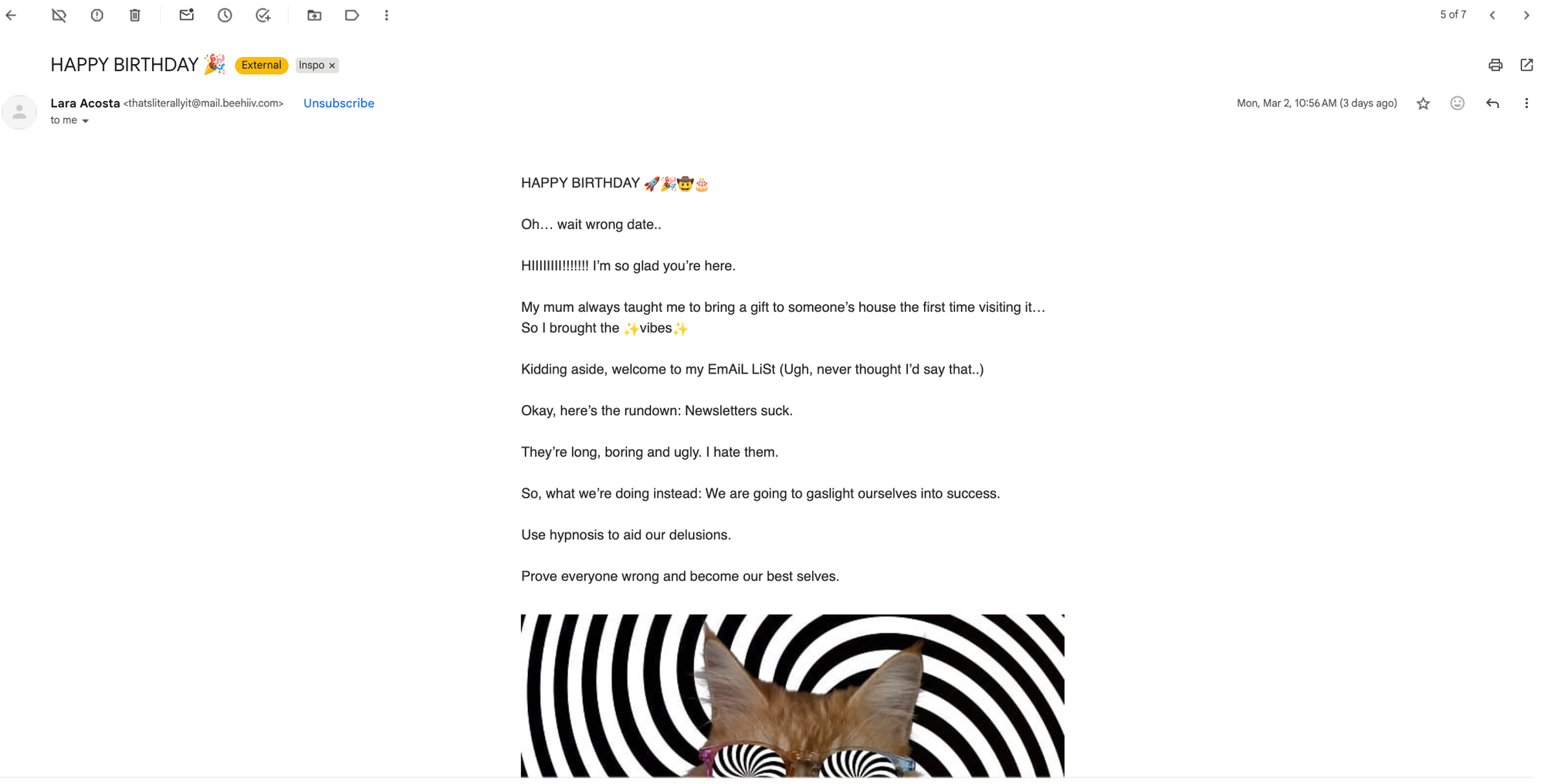
Here's one example of a newsletter offering real value on a consistent basis.
Step 2: Make the Sign-Up as Easy as Possible
Every additional step between a follower and a subscriber is friction, and friction kills conversions. Your goal is to make signing up feel effortless.
Use a link-in-bio tool. On Instagram, your link in bio is your most valuable piece of real estate for driving off-platform actions. Make sure your email sign-up (or your lead magnet landing page) is the first or most prominent link. Bury it behind five other links and most people won't bother scrolling.
Use a single-field sign-up form. The fewer fields, the better the conversion rate. First name and email address is standard. Just an email address converts even better. Unless you genuinely need other information at sign-up, don't ask for it.
Use a landing page, not just a form. A dedicated landing page for your lead magnet or newsletter does a much better job of converting traffic than a small embedded form. It gives you space to explain the value, show what subscribers get, and address any hesitation.
Step 3: Promote Your List Consistently in Your Content
Most business owners mention their email list occasionally. The ones growing their list quickly mention it constantly: in stories, in carousel CTAs, in captions, in Reels, in their bio, and in their DMs.
A few specific tactics that work well on Instagram:
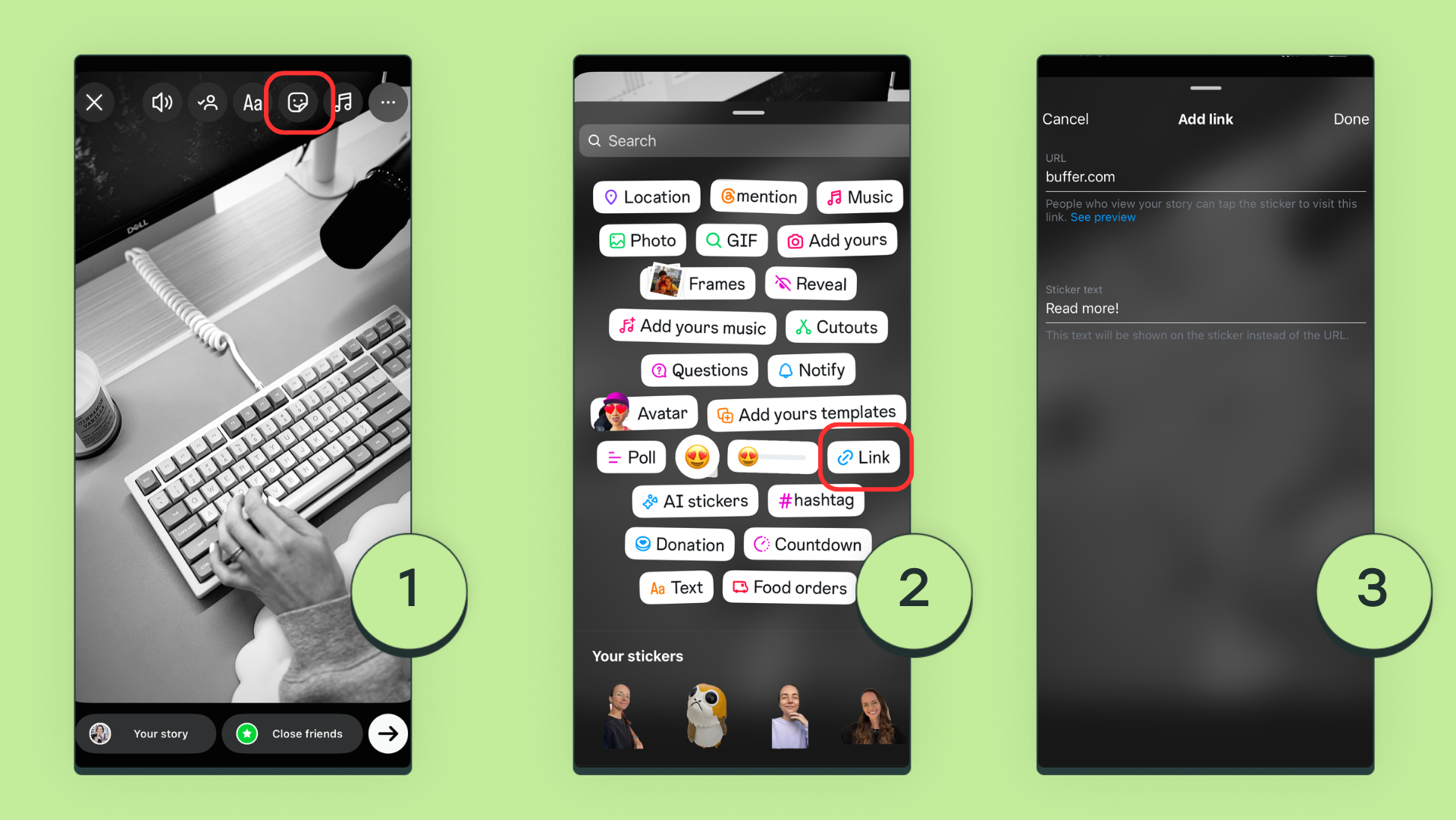
Stories with a link sticker. Instagram Stories with a link sticker (pointing to your sign-up page) convert well because the action is seamless and the format is low-stakes. Show your lead magnet, explain what it is and who it's for, and add the link sticker. Repeat this regularly, not just once.
Carousel posts with a CTA slide. The last slide of a carousel is prime real estate for a specific call to action. "Want the full framework as a free download? Link in bio" is a natural, non-pushy way to direct engaged readers toward your list. Since carousels already attract high save rates, the people who make it to your last slide are your warmest audience.
Reels that tease the lead magnet. A short Reel that previews the value of your freebie ("Here's a page from the template I'm giving away for free") and directs people to the link in bio works well for reaching new audiences who aren't yet following you.
Pinned posts. Pin a post about your lead magnet or newsletter to the top of your profile. Anyone who visits your profile after discovering you sees it immediately.
Step 4: Mention It in Your DMs
When someone engages with your content in a meaningful way (a genuine comment, a question, a reply to a story) that's an opportunity to deepen the relationship. Responding and naturally mentioning your freebie or newsletter ("I actually put together a full guide on this, want me to send you the link?") converts at a high rate because the conversation is already warm.
This isn't spam. It's responsive and helpful, and it feels nothing like a cold pitch when it's done in the context of a real conversation.
Step 5: Deliver on the Promise
Getting someone onto your list is only half the job. The other half is making sure they don't immediately unsubscribe or tune out.
Your welcome email sets the tone for the entire relationship. It should arrive immediately, remind them what they signed up for, deliver the promised resource or set clear expectations about what's coming, and give them a small reason to reply or engage (a question, a prompt, a next step).
After that, keep your emails consistent. Show up at the same frequency you promised. Deliver value. Keep selling to a level that feels proportionate to the value you're providing. The relationship between your email list and your business is built over time, not in a single campaign.
Tools That Help
There are several solid email marketing platforms that work well for small business owners and creators. Klaviyo, Flodesk, ConvertKit (now Kit), and Mailchimp are all popular options with different strengths depending on your needs and the size of your list.
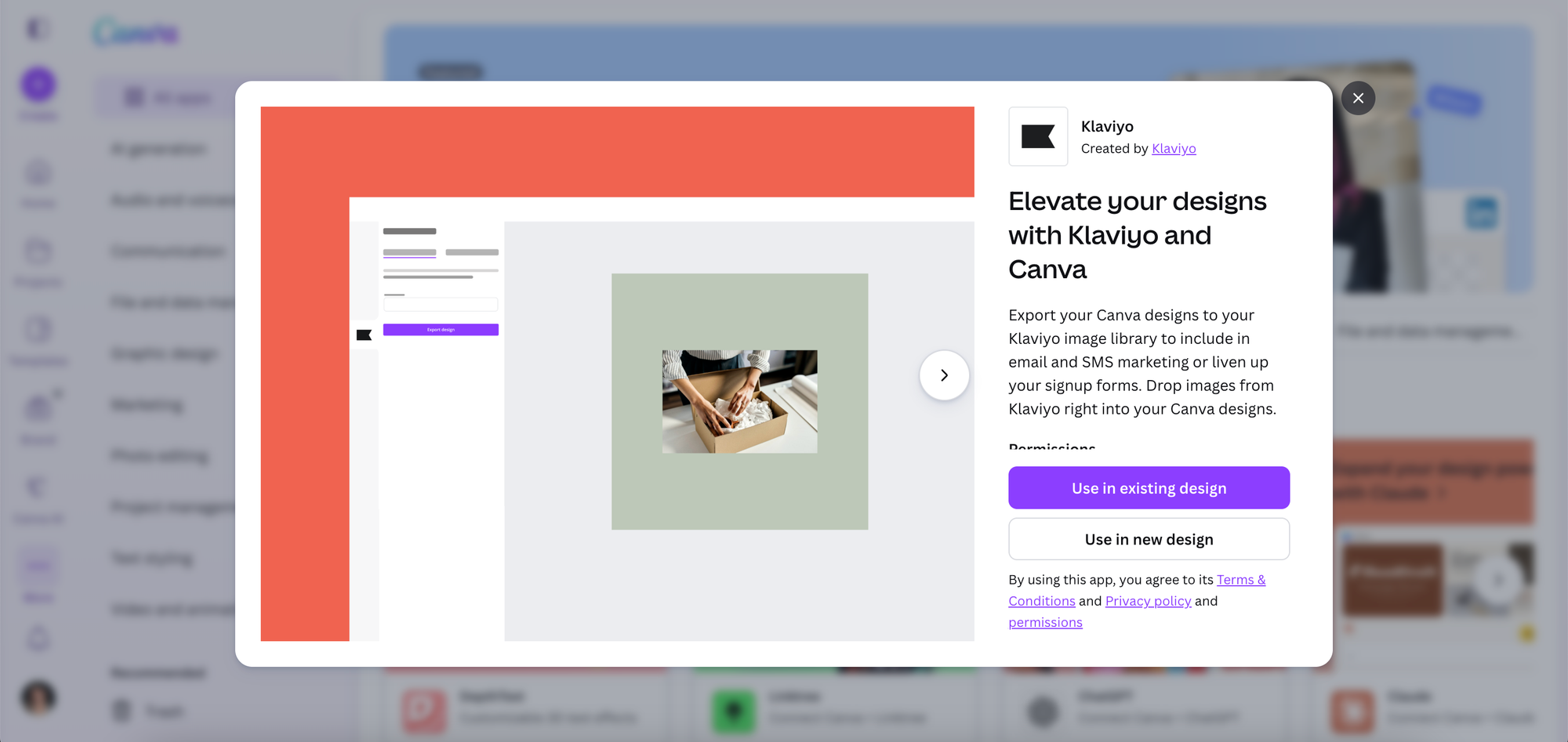
For designing email graphics that match your social content, the Klaviyo Canva app syncs your Canva designs directly to your Klaviyo image library, which keeps your visual assets consistent across both platforms without any manual downloading and uploading.
Frequently Asked Questions
How many followers do I need before starting an email list?
Zero. Start before you think you're ready. The earlier you begin building your list, the more it compounds over time. Waiting until you have a certain number of followers before starting an email list is one of the most common and costly mistakes business owners make.
What's a good email opt-in rate for Instagram?
It varies considerably depending on your niche, audience, and lead magnet. A conversion rate of 1 to 3% on link-in-bio clicks is common. Higher-quality lead magnets and more prominent promotion can push this significantly higher. The number matters less than the direction: is it growing?
Do I need a lead magnet to grow my email list?
A compelling lead magnet is the fastest way to grow a list, but it's not the only way. If your content is consistently excellent and your audience trusts your perspective, a well-articulated newsletter can attract subscribers on its own. Most business owners benefit from having both.
How often should I email my list?
Consistently enough that subscribers remember who you are, infrequently enough that your emails feel like events rather than noise. Weekly or biweekly tends to work well for most business owners. The most important thing is setting an expectation at sign-up and then meeting it.
What should I put in my welcome email?
Deliver the promised resource immediately, remind them who you are and what they can expect from your emails, and give them one small action to take (reply with a question, click a link, consume one piece of content). Keep it warm, personal, and short. The welcome email has the highest open rate of any email you'll ever send, so make it count.
Can I grow my email list without a website?
Yes. Many email marketing platforms provide hosted landing pages, so you don't need your own website to have a sign-up page. Tools like ConvertKit (Kit), Flodesk, and Klaviyo all offer this. You can point your link in bio directly to a hosted landing page and start collecting subscribers with no website required.